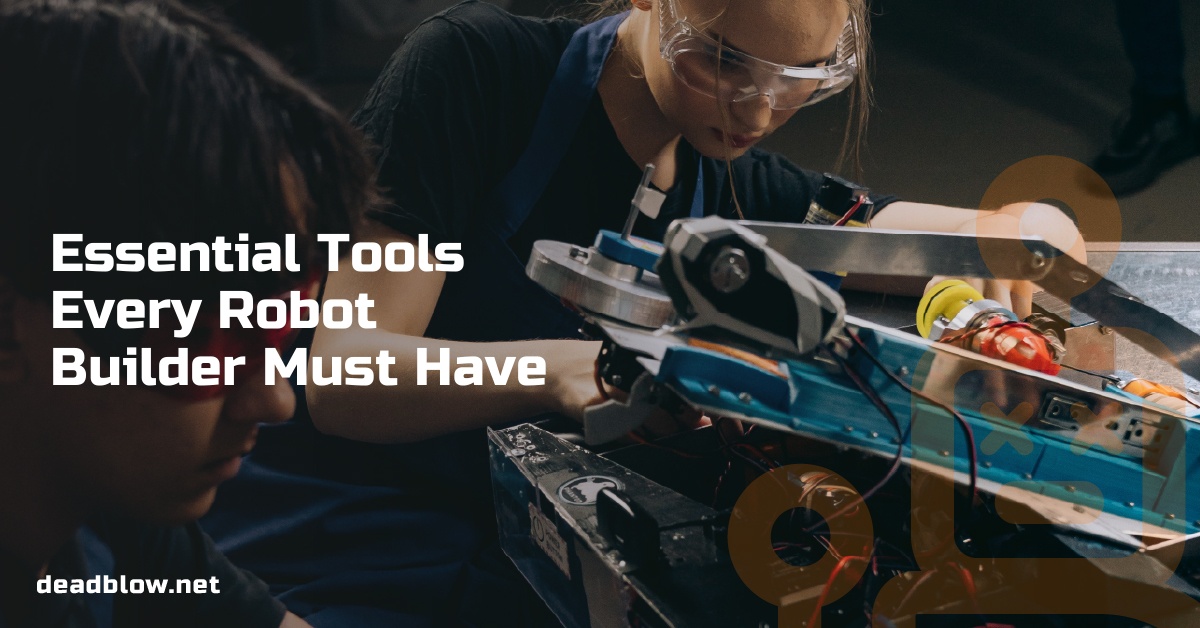
As robot builders, we understand the importance of having the right tools to bring our innovative creations to life. In this article, we will delve into the essential robot builder tools that are a must-have for every aspiring and experienced builder alike. With these tools in your arsenal, you can elevate your robot-building journey and create high-performance robots that push the boundaries of technology.
From basic tools that lay the foundation to advanced tools that take your projects to new heights, we’ve got you covered. We’ll also explore specialized tools that cater to specific needs. Whether you’re a beginner taking your first steps in the world of robotics or a seasoned builder looking to expand your toolkit, these essential tools will empower you to turn your robot-building dreams into reality.
So, let’s dive in and discover the must-have robot builder tools that will fuel your passion for robotics and unlock endless possibilities!
Basic Tools for Robot Building
When it comes to robot building, having the right tools is essential. In this section, we will discuss the basic tools that every robot builder should have in their arsenal. These tools will help you troubleshoot circuits, cut and strip wires, fasten electronic devices, and solder electronic parts on a circuit.
Multimeter
A multimeter is an indispensable tool for any robot builder. It allows you to measure voltage, current, and resistance in electronic circuits. With a multimeter, you can troubleshoot and debug circuitry, ensuring that everything is working as intended.
Hobby Knife
A hobby knife is a versatile tool that comes in handy for various tasks in robot building. Whether you need to make quick and precise cuts or perform delicate work, a hobby knife is the tool for the job. It is especially useful for trimming wires, cutting through tape, and shaping materials.
Wire Cutters
Wire cutters are a must-have tool for any robot builder. They allow you to cut and strip wires with ease. Whether you are working with small gauge wires or larger cables, a good pair of wire cutters will help you get the job done efficiently.
Screwdriver
A screwdriver is a basic tool that is essential for fastening electronic devices. It comes in various sizes and types, allowing you to tighten or loosen screws as needed. Having a set of screwdrivers with different tips will ensure that you have the right tool for any screw.
Soldering Iron
A soldering iron is a crucial tool for any robot builder who intends to solder electronic parts on a circuit. It allows you to create permanent and reliable connections between components. Whether you are assembling a custom circuit or repairing a broken connection, a soldering iron is essential for working with electronics.
| Tool | Description |
|---|---|
| Multimeter | A tool used to measure voltage, current, and resistance in electronic circuits. |
| Hobby Knife | A versatile tool used for cutting, shaping, and performing delicate work. |
| Wire Cutters | Tools used for cutting and stripping wires of various gauges. |
| Screwdriver | A tool used for fastening or loosening screws in electronic devices. |
| Soldering Iron | A tool used for soldering electronic parts on a circuit to create reliable connections. |
Building Materials and Hand Tools
When it comes to building robots, having the right materials and hand tools is essential. The choice of building materials will depend on the specific requirements of your robot’s mechanical frame. Thin wood or Plexiglas are commonly used options that provide durability and flexibility while keeping the weight of the robot in check. These materials can easily be shaped, cut, and drilled to create the desired frame structure.
Now let’s talk about the hand tools that are indispensable for assembling your robot. Screwdrivers, both flathead and Phillips, come in different sizes and are crucial for fastening various components. Pliers are handy for gripping and bending wires, while a drill is essential for creating holes in the building materials. With a solderless breadboard, you can easily prototype different circuits and test the connections without the need for soldering.
Building Materials
The choice of building materials plays a vital role in the construction of a robot’s mechanical frame. Here are some commonly used options:
| Material | Description |
|---|---|
| Thin wood | Durable and lightweight material that can be easily cut and shaped. |
| Plexiglas | A transparent, lightweight, and impact-resistant material that offers flexibility in design. |
Hand Tools
Here are some essential hand tools that every robot builder should have:
- Screwdrivers: Both flathead and Phillips screwdrivers in different sizes for fastening components.
- Pliers: Used for gripping, bending, and cutting wires.
- Drill: Essential for creating holes in building materials.
- Solderless Breadboard: Allows for quick prototyping and testing of circuits without the need for soldering.
By having the right building materials and hand tools, you’ll be well-equipped to bring your robot’s mechanical frame to life. These essential tools will enable you to create sturdy structures and assemble the various components of your robot with ease.
Additional Advanced Tools for Robot Building
When it comes to taking your robot building to the next level, having additional advanced tools can make a significant difference. In this section, we will explore some tools that are worth considering for your robot-building arsenal.
CNC Router
A CNC router is a powerful tool that can shape any design you have in mind. It utilizes computer numerical control (CNC) technology to precisely cut, carve, and shape various materials such as wood, plastic, and metal. With a CNC router, you can create intricate and precise parts for your robots, making them even more unique and functional.
Rotary Tool
A rotary tool, such as a Dremel, is a versatile handheld tool that can be a game-changer for robot builders. With interchangeable accessories, a rotary tool can be used for drilling, grinding, sanding, and polishing. It allows you to work on intricate details, smooth edges, and modify parts with ease. Having a rotary tool in your toolbox will greatly enhance your ability to create professional-looking robots.
Multimeter, Soldering Iron, and Microcontroller
In addition to the basic tools mentioned in the previous section, a multimeter, soldering iron, and microcontroller are also essential for advanced robot building. A multimeter helps you test and measure electrical components, ensuring proper functionality and troubleshooting any issues. A soldering iron is crucial for soldering electronic parts onto circuits, making strong and reliable connections. Finally, a microcontroller serves as the brain of your robot, allowing you to program and control its behavior and functions.
By incorporating these additional advanced tools into your robot-building toolkit, you will have the necessary resources to bring your innovative ideas to life. Whether it’s shaping intricate designs with a CNC router, refining details with a rotary tool, or ensuring the functionality of your circuits with a multimeter, these tools will empower you to create robots that push the boundaries of technology.
| Tool | Description |
|---|---|
| CNC Router | A powerful tool that shapes designs with precision using computer numerical control technology. |
| Rotary Tool | A versatile handheld tool used for drilling, grinding, sanding, and polishing. |
| Multimeter | Used to test and measure electrical components, ensuring proper functionality. |
| Soldering Iron | Essential for soldering electronic parts onto circuits, creating strong connections. |
| Microcontroller | The brain of your robot, allowing for programming and control of its behavior and functions. |
Computer Requirements for Robot Programming
When it comes to robot programming, having a computer with the right specifications and connectivity options is crucial. Here, we’ll discuss the computer requirements for seamless robot programming. Whether you are a beginner or an experienced robot builder, having the appropriate computer setup is essential for a smooth programming experience.
Hardware Requirements
First and foremost, your computer should have a visual interface with a screen, keyboard, and mouse. In terms of hardware specifications, it is recommended to have a computer with sufficient RAM and hard drive capacity to handle the software programs and data associated with robot programming. This ensures that your computer can run the necessary applications without any performance issues.
Furthermore, it is important to have the appropriate connectivity options on your computer. USB ports are commonly used for connecting robotic components, such as microcontrollers or sensors, to the computer. Serial ports are also useful for data transfer and communication between the computer and the robot. Make sure your computer has these ports available to establish a seamless connection.
Software Requirements
In terms of software, you will need an integrated development environment (IDE) or programming software that supports the programming language used for your particular robot. IDEs provide a user-friendly interface for writing, editing, and debugging code. Popular programming languages for robotics include Python, C++, and Java.
Additionally, you may need to install specific drivers or libraries depending on the hardware components of your robot. These drivers enable your computer to communicate effectively with the robot’s sensors, actuators, and other peripherals. It is recommended to consult the documentation or the manufacturer’s website for the specific drivers required for your robot.
| Computer Requirements for Robot Programming | |
|---|---|
| Hardware Requirements | – Visual interface (screen, keyboard, mouse) |
| – Sufficient RAM and hard drive capacity | |
| – USB and Serial ports | |
| Software Requirements | – IDE or programming software |
| – Programming language support (Python, C++, Java) | |
| – Specific drivers or libraries | |
Tools for Prototyping and Debugging
When it comes to the crucial stages of prototyping and debugging during robot building, having the right tools is essential. These tools enable us to ensure the functionality and performance of our robots. Here are three key tools that every robot builder should have in their arsenal:
1. Multimeter
A multimeter is an invaluable tool for debugging electronic circuits. It allows us to measure voltage, current, and resistance, helping us identify any issues or faults in our circuitry. With its various functions and settings, a multimeter provides us with accurate readings, enabling us to troubleshoot and rectify problems effectively.
2. CNC Router
When it comes to prototyping, precision is crucial. A CNC router is a powerful tool that can transform our digital designs into physical prototypes with exceptional accuracy. It allows us to carve, cut, and shape materials, such as wood or plastic, according to our specifications. With a CNC router, we can bring our ideas to life and test them before moving forward with the final robot assembly.
3. Soldering Iron
A soldering iron is an essential tool for making solid electronic connections. It enables us to join wires, components, and circuits together, ensuring reliable conductivity. With a soldering iron, we can create robust and secure connections that withstand the demands of our robot’s operation. It’s a skill every robot builder should master.
By having these tools in our toolbox, we can effectively prototype and debug our robots, ensuring they function optimally. Whether it’s measuring circuits, precision prototyping, or making strong connections, the multimeter, CNC router, and soldering iron are must-haves for every robot builder.
| Tool | Function |
|---|---|
| Multimeter | Measures voltage, current, and resistance for debugging circuits |
| CNC Router | Precision prototyping tool for carving and shaping materials |
| Soldering Iron | Creates solid electronic connections for reliable conductivity |
Miscellaneous Tools and Accessories
When it comes to robot building, having the right tools and accessories can make all the difference. In addition to the essential tools mentioned earlier, there are several miscellaneous tools that can come in handy throughout your robot-building journey. From cutting and measuring to safety and organization, these tools will help you streamline your process and ensure that every step of your project is a success.
Scissors
Scissors are a versatile tool that you’ll reach for time and time again. Whether you need to cut wires, trim adhesive tapes, or modify materials, a good pair of scissors is essential. Look for a sturdy pair that is comfortable to hold and has sharp blades for clean, precise cuts.
Safety Goggles
Protecting your eyes should be a top priority when working with tools and materials. Safety goggles provide a barrier against flying debris and harmful particles, keeping your eyes safe from potential injuries. Invest in a pair of safety goggles that are comfortable, fit well, and provide clear vision so you can focus on your robot-building tasks with peace of mind.
Adhesive Tapes
Adhesive tapes are a valuable resource for robot builders. They can be used for securing components, bundling wires, and even making quick fixes. There are various types of adhesive tapes available, such as electrical tape and double-sided tape, each serving different purposes. Make sure to have a selection of adhesive tapes on hand to meet the specific needs of your robot-building projects.
Alligator Clips
Alligator clips are handy tools that can simplify electrical connections during prototyping and testing. They have jaws that can securely grip wires and components, providing a temporary connection that can be easily adjusted or removed. Whether you’re connecting sensors, actuators, or other electronic components, alligator clips can save you time and effort in making temporary connections.
Metal Ruler
A metal ruler is an essential tool for precise measurements in robot building. It provides a straight edge for marking and cutting materials, ensuring accuracy and consistency in your projects. Look for a metal ruler with clear markings and a non-slip backing to facilitate easy measuring and marking.
Pen, Paper Towels, and Notebook
Keeping track of observations, measurements, and ideas is crucial throughout the robot-building process. Have a pen and notebook on hand to jot down important notes, sketches, and calculations. Paper towels are also useful for wiping away any spills or messes that may occur during construction. Staying organized and documenting your progress will help you stay on track and troubleshoot any issues that arise.
By having these miscellaneous tools and accessories at your disposal, you’ll be well-equipped to tackle any robot-building challenge that comes your way. From precise measurements to safety precautions, these tools will enhance your efficiency and creativity as you bring your robotic creations to life.
| Tool/Accessory | Function |
|---|---|
| Scissors | Used for cutting wires, materials, and adhesive tapes |
| Safety Goggles | Provide eye protection from debris and particles |
| Adhesive Tapes | Used for securing components and making quick fixes |
| Alligator Clips | Aid in temporary electrical connections during prototyping |
| Metal Ruler | Provides a straight edge for precise measurements and marking |
| Pen, Paper Towels, and Notebook | Used for recording notes, sketches, and maintaining cleanliness |
Conclusion
As robot builders, we understand the importance of having the right tools for the job. Throughout this article, we have explored the essential tools that every robot builder must have in their arsenal. From basic tools like a multimeter and soldering iron to advanced tools like a CNC router and microcontroller, these tools will help you create innovative and high-performance robots.
Whether you are a beginner just starting your robot-building journey or an experienced builder looking to take your projects to the next level, investing in these essential tools is crucial. They will not only make your building process more efficient but also open up new possibilities for creativity and experimentation.
Remember, building robots is not just about assembling components. It is a journey of discovery, problem-solving, and pushing the boundaries of what is possible. With the right tools at your disposal, you are well-equipped to embark on this exciting robot-building journey. So, gather your tools, unleash your imagination, and let’s build some incredible robots together!

Thomas Hyde is an advocate for technological innovation and high-octane competitions, embodying his passion through Dead Blow, a premier website dedicated to the dynamic universe of Battle Bots, Robot Wars, and home-built combat robots. With a rich background in engineering and a lifelong fascination with robotics, Thomas created Dead Blow to serve as a hub for enthusiasts and builders alike.